Grantmaking is so much more than just a transfer of funds. It’s an opportunity to build relationships, strengthen organizations, and create lasting community change. The following practices can help grantmakers increase their impact.
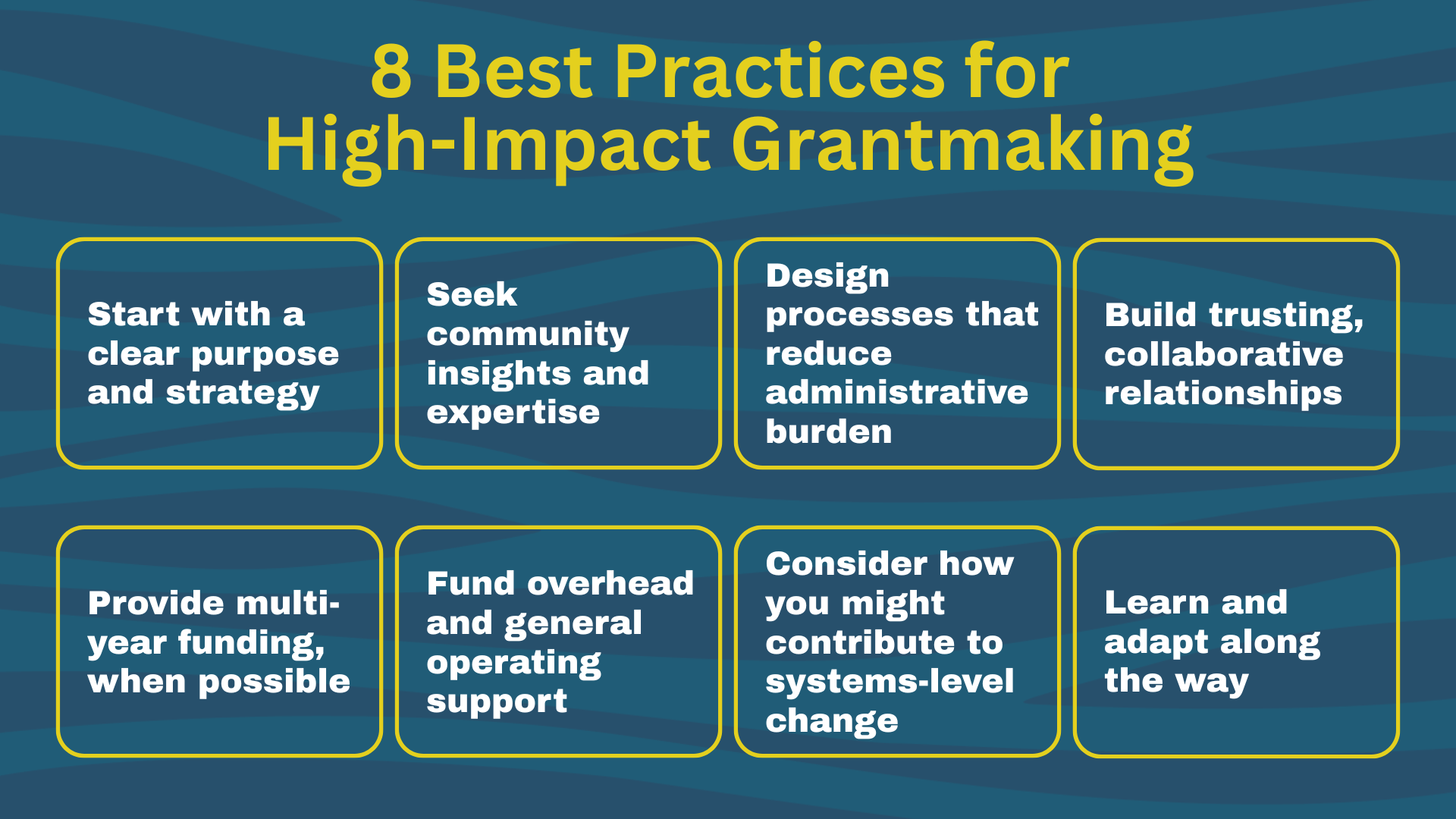
Start with a clear purpose and strategy: Ground your grantmaking in a clear mission and theory of change, including defining your funding priorities, communities you aim to serve, and intended outcomes. Then, clearly define how, to whom, and for what purpose you will award grants and communicate eligibility, geographic focus, and success measures upfront. Grantmaking strategy should reflect an organization’s values, aspirations, and priorities. Clear guidelines help nonprofits quickly determine whether an opportunity is the right fit, saving valuable time for both applicants and funders.
Seek community insights and expertise: Community-informed grantmaking leads to stronger decisions while helping shift power toward historically marginalized communities. Seek input and insights from experts, including communities that would be directly impacted by funding, such as community leaders, previous grantees, nonprofit leaders, and other people with relevant lived expertise. Consider prioritizing grantmaking to organizations that are led by the communities they serve. Be aware of the effort required of grantees and community members to contribute their input into your process, and consider compensating them for their time.
Design processes that reduce administrative burden: Design application and reporting processes that are clear, accessible, and proportionate to the size of the funding. Consider using brief letters of interest, interviews, or existing organizational materials instead of requiring lengthy custom proposals or reports. Ensure appropriate due diligence, rigor, and accountability, while minimizing unnecessary administrative work so nonprofits can spend more time advancing their missions.
Build trusting, collaborative relationships: Recognize the inherent power imbalance between funders and grantees and intentionally build relationships grounded in trust, transparency, and mutual accountability. Treat grantees as partners by inviting honest dialogue, collaboratively developing expectations, and supporting their long-term organizational capacity rather than simply monitoring progress or compliance.
Provide multi-year funding, when possible: If you can, provide flexible, multi-year funding to give organizations the stability to plan for the future, invest in their teams, and focus on long-term impact rather than on annual fundraising goals.
Fund overhead and general operating support: Any business requires investment in general operating expenses, and nonprofits are no different. Fund or include funding for core operating support, staffing, infrastructure, implementation, and learning, not only program delivery. Funding overhead expenses helps to cover the full cost of programs. General operating support not only allows organizations to direct funds where they are most needed, but also flexibly respond to emerging issues and community needs.
Consider how your grantmaking might contribute to systems-level change: Meeting immediate direct service and relief needs is critical, but lasting impact also requires addressing root causes. Even if your grantmaking is direct service focused, consider supporting movement building, policy, and advocacy efforts that advance systems-level change as part of your grantmaking. Grantmakers are in a position of power and privilege and are uniquely positioned to invest in innovative solutions, respond to emerging opportunities, and help create long-term, sustainable change.
Learn and adapt along the way: Use data from grant reporting and conversations with grantees to inform future grantmaking and refine your strategy. Share lessons learned and knowledge with grantees, funders, and the broader field. Use a learning agenda tied to outcomes to continuously adapt practices and funding strategy as you learn and adapt.
What is your biggest grantmaking lesson or challenge? Send us a note and share your experience. We’d love to hear from you.