
Our Insight-to-Impact Approach to Successful Strategic Planning
Organizations often approach strategic planning as a document-production exercise. In our experience, the real value is the thinking, choices, alignment, and shared understanding that happen along the way. The final plan is simply the expression of that work. We’ve designed and regularly implement an approach to helping clients develop effective strategic plans that amplify their mission impact.
No two organizations or challenges are the same. Our Insight-to-Impact strategic planning process delivers a flexible, customized experience and strategic plan for each client. We work with clients to tailor the process, drawing from the components below to design an experience and a strategic plan fit to each organization’s context and goals. Every engagement, though, follows our three-phased framework.
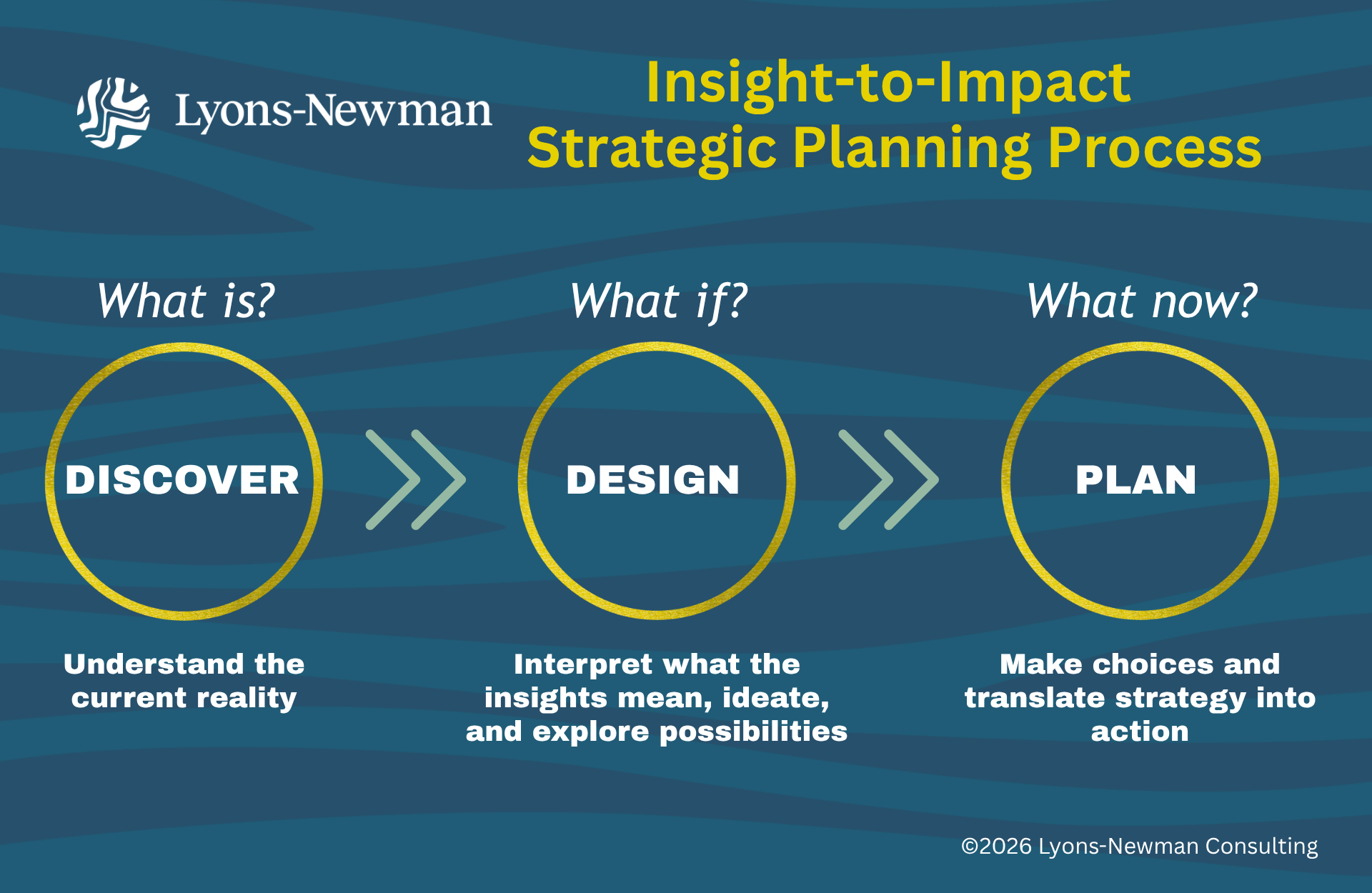
1. DISCOVER — WHAT IS?
Understand the current reality
Strategic issue identification and framing: Identify the strategic questions and critical decisions facing the organization that will guide the process, set expectations, and identify mandates.
Discovery and strategic analysis: Identify relevant stakeholders; gather stakeholder input; assess external context and opportunities; evaluate organizational strengths, weaknesses, opportunities, and threats (SWOT); and analyze data.
2. DESIGN — WHAT IF?
Interpret what the insights mean, ideate, and explore possibilities
Organizational identity and positioning: Define or refine the organization’s vision, mission, values, and theory of change.
Strategic options and scenario planning: Explore possibilities and future scenarios, evaluate alternatives, test assumptions, and surface the tradeoffs between strategic choices.
3. PLAN — WHAT NOW?
Make choices and translate strategy into action
Strategic plan development: Make choices; prioritize strategic directions; and develop measurable goals, strategies, and key initiatives.
Implementation and accountability: Create an actionable implementation plan with decision criteria, ownership, timelines, and performance measures, aligning organizational culture with strategic priorities.
At the end of this process our clients have:
A clear, compelling, and actionable strategic plan tailored to their organization’s unique strengths and opportunities
A shared vision for the future and alignment on their organization’s mission, vision, values, and theory of change
Clarity about their organization’s strategic priorities and core capabilities, including the key choices that will drive the greatest impact
A practical roadmap for action with coordinated strategies to capitalize on opportunities, address challenges, and adapt to change
Clear goals, metrics, and a framework for measuring progress and guiding day-to-day decision-making
Engaged board members, staff, and key stakeholders who are aligned, committed, and champions of their organization’s vision and strategic priorities
An engaging, inclusive, and culturally responsive planning process where people feel heard, valued, and empowered to contribute their best thinking
Increased organizational capacity for strategic thinking, productive dialogue, collaboration, and adaptive leadership
Stronger relationships, shared ownership, and collective capacity for action among the people who shape and are shaped by their organization’s work
Tools and messages to communicate their strategic direction with funders, partners, and other stakeholders
Greater organizational effectiveness, resilience, sustainability, and mission impact
Reach out to us to learn more about how we can design a customized approach to your strategic planning process.